What does “downwind” mean, and how does it reflect Maomao’s quiet strength?
Spoiler Notice: This article discusses Seasons 1 and 2, as well as the first two episodes of Season 3 (through Episode 50 overall).
Hello, and welcome!
On October 2, 2026, The Apothecary Diaries finally returned for its third season!
It’s been more than a year since Episode 47, when saying goodbye to Shisui left me in tears. I’ve been waiting so long to see Maomao and the others again.
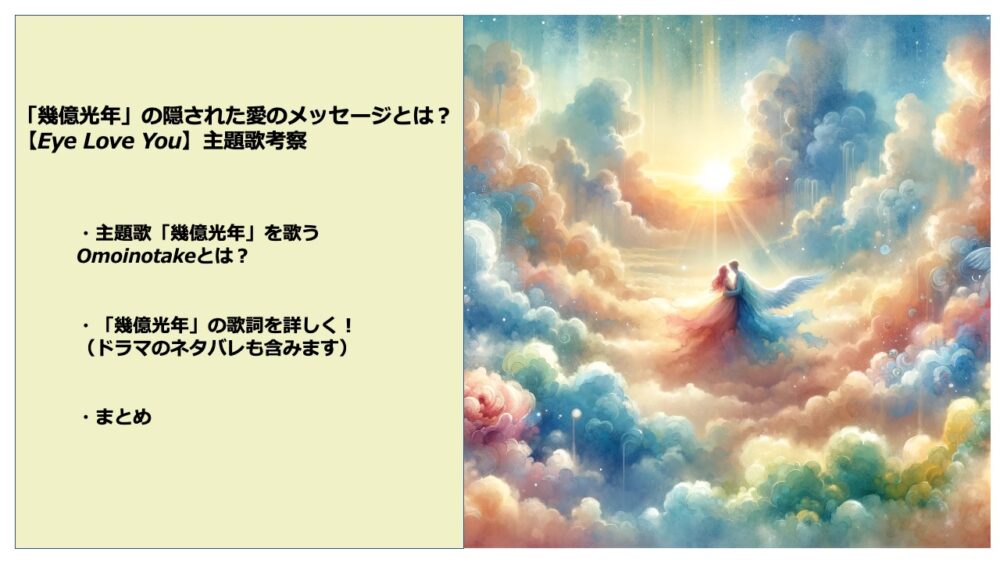
And then came the new opening theme by Yorushika, “Kumo wo Nuke Kazashimo e Watashi dake,” also introduced in English as “Beyond the Clouds, Only Me Downwind.”
The first time I heard it together with the opening animation, I felt something unusual.
The music seemed to carry the atmosphere of a distant land. It was beautiful, but there was also a restless feeling that made my heart beat a little faster.
For some reason, the word nomad came to mind.
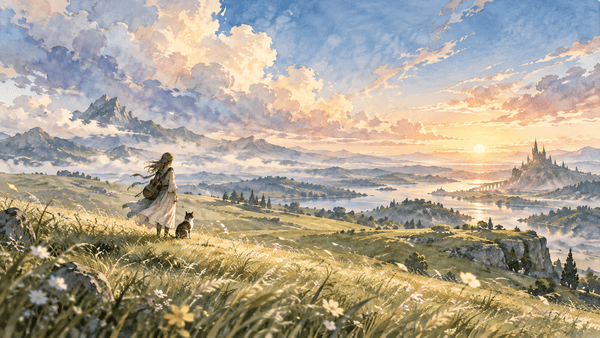
I could almost imagine endless grasslands, the wind moving across the open sky, and someone beginning a long journey.
Perhaps it was because Season 3 seemed ready to take Maomao beyond the inner court and into a much wider world.
But one word in the song particularly caught my attention: downwind.
The more I thought about it, the more I began to see Maomao herself in that word.
I’d love to share my interpretation with you.
How Did Yorushika’s Season 3 Opening Song Come to Life?
According to n-buna, the songwriter and composer behind Yorushika, the song began with a single sentence that kept appearing in his mind while he was thinking about his next album.
There was no melody yet. Just a mysterious phrase.
Whenever he thought about those words, he imagined a vast grassland stretching endlessly into the distance.
The first instrument that came to mind was the erhu, a traditional two-stringed bowed instrument known for its expressive, almost human-like sound.
Later, when n-buna learned that the theme of The Apothecary Diaries Season 3 would be a journey, the landscape he had been imagining suddenly connected with the story.
I love that.
A phrase that had been quietly living in someone’s imagination finally found a world where it belonged.
And now, whenever I hear the song, I can almost feel the wind moving across those grasslands.
A Song That Makes the World Feel Bigger
Something struck me as I listened more closely to the opening.
The images suggested by the lyrics seem to grow larger as the song progresses.
First, there are small things close to us, such as wind and flowers. Then come clouds and the enormous sky.
It’s almost as if the world is opening up, little by little.
I find that especially interesting because Season 3 takes Maomao’s story beyond the familiar surroundings of the inner court.
The places she visits, the people she meets, and the mysteries she must solve are becoming much larger in scale.
Listening to the song, I felt as though I was watching her world expand.
Yet the music isn’t entirely peaceful.
At certain moments, it seems to urge someone forward, as though there is no time to waste.
And then there’s the imagery of scent.
That immediately made me think of Maomao.
She notices the smallest details in medicines, poisons, food, and everyday life. Things that other people overlook can become important clues to her.
Even in the first episode of Season 3, she notices something strange about breakfast at the Verdigris House.
I know I might be reading too much into a few words, but that’s part of the fun of interpreting a song.
To me, Maomao is someone who keeps moving forward without losing her ability to stop, observe, and think.
And I really love that about her.
What Does “Downwind” Actually Mean?
Now, let’s look at the word that interested me most.
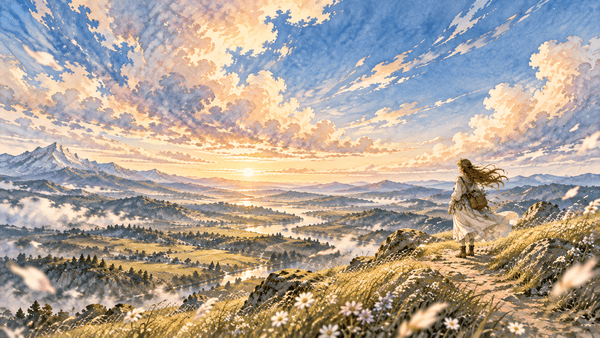
In English, downwind means in the direction the wind is blowing. The related word leeward describes the side sheltered from, or facing away from, the wind.
The opposite is windward, the side facing the wind.
In Japanese, there are also expressions that associate being on the windward side with having the upper hand.
That doesn’t mean being downwind always represents weakness or disadvantage, of course.
But this contrast gave me an interesting idea.
What if the song isn’t about fighting against the wind at all?
What if it’s about choosing to move in the direction the wind is already traveling?
When I thought about that, Maomao was the first person who came to mind.
She rarely challenges powerful people directly.
She understands the dangers of the world she lives in and knows when to remain unnoticed.
But she never abandons her curiosity about medicine and poison, or her desire to discover the truth.
She doesn’t always fight back. But she doesn’t give up, either.
Maybe that’s why the idea of moving downwind feels so much like Maomao to me.
It’s not necessarily an escape.
It might simply be another way of moving forward.
Maomao’s Quiet Strength: Two Moments I Remember
Thinking about this interpretation reminded me of two moments from the earlier seasons.
Season 1, Episodes 1–2: The Poisoned Face Powder Mystery
At the beginning of the series, Maomao is working as a servant in the inner court.
When she hears rumors about a mysterious curse affecting the emperor’s children, her knowledge of medicine helps her recognize the real danger: poisonous lead-based face powder.
But she doesn’t publicly accuse anyone.
Instead, she tries to deliver a warning anonymously.
At that time, Maomao holds a very low position. Speaking openly could put her own life in danger.
And yet she refuses to ignore what she has discovered.
One of the children dies, but Princess Lingli survives, and Jinshi eventually recognizes Maomao’s intelligence.
This is one of the earliest examples of the kind of strength I admire in her.
She doesn’t challenge the entire system.
She finds a way to act within it.
And sometimes, that small act makes an enormous difference.
Season 2, Episode 39: The Ice Dessert Incident
Another memorable moment comes in Episode 39.
Xiaolan accidentally breaks the ice intended for Consort Loulan.
In the inner court, where servants can face severe punishment for mistakes, this is a frightening situation.
But Maomao doesn’t waste time arguing with the angry officials.
Instead, she comes up with a solution.
Using the broken ice, ingredients from the kitchen, and her knowledge of cooling techniques, she creates a frozen dessert.
I remember watching that scene and thinking, “That’s Maomao!”
She doesn’t defeat her opponents through force.
She changes the situation through knowledge.
And even when she needs Jinshi’s cooperation, she accepts the conditions without losing sight of her real purpose: helping Xiaolan.
What makes the scene even more endearing is that Maomao can’t quite bring herself to admit that she simply wants to help her friend.
That’s so like her, isn’t it?
The same episode also shows Maomao noticing subtle signs that Consort Gyokuyou’s baby may be in the breech position.
Once again, she recognizes something that other people have missed.
Perhaps Maomao’s greatest strength is her ability to notice what others don’t.
Not fighting back doesn’t mean she is powerless.
Sometimes, being observant and resourceful is a far more effective kind of strength.
From “You” to “Me”: A Change in Perspective
There’s another detail in Yorushika’s song that made me stop and think.
The lyrics shift between addressing another person and speaking from the perspective of the self.
In Japanese, this contrast between omae (you) and watashi (I or me) is especially noticeable.
At first, I simply enjoyed the melody.
But once I noticed this change, I began hearing the song differently.
Who is speaking?
Who is being addressed?
And why does the perspective change?
Could it reflect two people who are moving along the same path but experiencing that journey in different ways?
Or perhaps the song is about someone gradually discovering their own direction.
I don’t know whether n-buna intended any connection to Maomao and Jinshi.
This is only my personal interpretation.
Still, I can’t help wondering whether those shifting perspectives are an important part of the song’s emotional meaning.
How the Opening and Ending Themes Reflect Maomao and Jinshi
The more I listen to the opening theme, the more bittersweet it feels.
The scenery stretches endlessly into the distance, yet the title emphasizes being alone.
That made me wonder about the ending theme, “AIYOU” by Eve.
In his official comment, Eve speaks about how difficult it can be to understand another person’s heart, even when that person is physically close.(From Eve’s comment on the official anime website)
Isn’t that exactly what makes Maomao and Jinshi’s relationship so fascinating?
They spend time together.
They care about each other in ways that aren’t always easy to express.
And yet, they often seem unable to understand what the other person is truly feeling.
The ending animation made that emotional distance feel especially poignant to me.
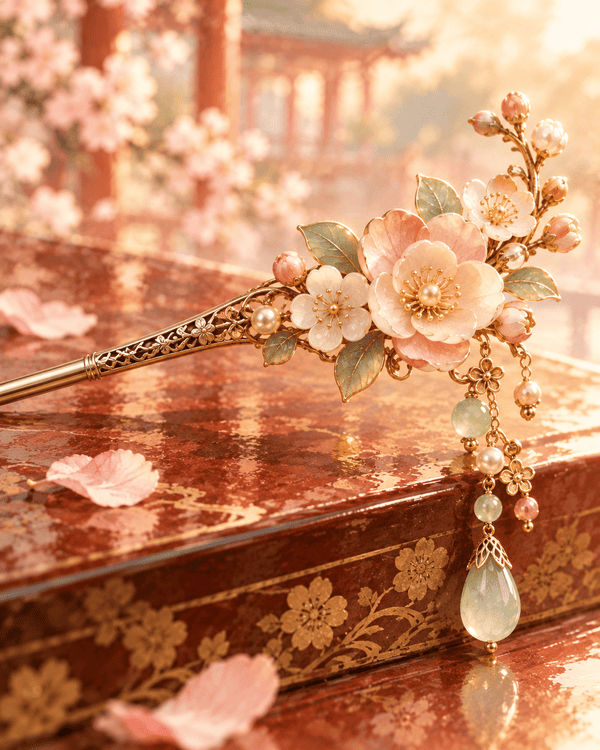
There’s also a moment when Maomao gazes at a hairpin.
At first, it’s tempting to connect the image to Jinshi and his feelings for her.
But I was reminded of another hairpin, one Maomao entrusted to Loulan in Episode 46.
Could the image also carry memories of Loulan?
I can’t say for certain.
But I love that a single object can make us think about more than one relationship.
To me, the opening seems to suggest movement into a wider world, while the ending draws our attention back to the emotional distance between two people.
Together, the songs make Season 3 feel both adventurous and deeply personal.
Three Things I’m Most Curious About in Season 3
Before I continue, I should mention that I’m primarily an anime-only viewer.
I haven’t read the light novels, apart from looking up a short passage related to the lullaby scene in Episode 50.
So my thoughts are based on the anime, official previews, and my own imagination.
And there are three things I’m particularly curious about.
1. The Warning Loulan Left Behind
According to the official Season 3 synopsis, Jinshi is now facing his responsibilities as the emperor’s younger brother.
He must also consider the warning Loulan left behind about a disaster that may threaten the entire nation.
After crying through Episode 47, just thinking about Loulan makes my heart ache.
Her story may have reached a turning point, but her actions are still influencing what happens next.
In a way, I feel as though she remains part of the story.
What exactly was she trying to protect?
And how will her warning affect Maomao and Jinshi?
2. The Strange Breakfast at the Verdigris House
Season 3 begins with Maomao returning to her life as a pharmacist in the pleasure district.
Then something unusual appears at breakfast.
I must admit, the meal didn’t look particularly appealing to me!
But of course, Maomao isn’t the sort of person who simply ignores something strange.
She has to investigate.
What I find interesting is that the mysteries are no longer limited to the inner court.
The story now seems ready to explore problems that could affect the entire country.
And Jinshi’s new political responsibilities make everything feel more serious.
It really does feel like the beginning of a much larger journey.
3. The Mysterious White Lady
Another character I’m watching closely is the mysterious White Lady, known in Japanese as Pai Niangniang.
Her pale appearance and red eyes make her immediately striking.
But what interests me most is her connection to medicine.
In the promotional material, she speaks about a mysterious medicine that can ease people’s suffering.
That sounds comforting at first.
But in a story like The Apothecary Diaries, I can’t help feeling suspicious!
After all, we learned very early in the series that something presented as harmless can sometimes be dangerous.
How will Maomao react to this mysterious medicine?
I suspect she won’t be able to resist investigating it.
And I can’t wait to find out.
Update: The Lullaby Maomao Sang in Episode 50
Spoilers for Season 3, Episode 2 (Episode 50 overall).
Episode 50 aired in Japan on October 9, 2026.
I couldn’t watch it live, but when I finally caught up, I was delighted to see more scenes of Maomao and Jinshi together.
Their conversations are so wonderfully awkward.
Sometimes they seem to be talking past each other, and that’s exactly what makes their relationship so entertaining to watch.
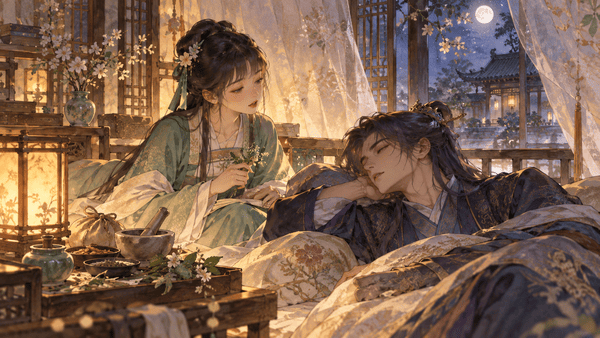
One of my favorite moments was when Maomao sang a lullaby to the exhausted Jinshi.
I became curious about the song, so I looked up the corresponding passage in the original web novel published on Shōsetsuka ni Narō, a Japanese fiction website.
There, the lullaby is described as a children’s song sung by courtesans.
That detail made me think back to Episodes 23 and 24 of Season 1.
I remembered the song associated with Fengxian, Maomao’s mother.
I haven’t been able to confirm whether the two songs are actually the same.
Still, the thought of songs being passed down through the pleasure district made the scene feel even more touching to me.
It brought back memories of Fengxian and made me wonder once again where Maomao and Jinshi’s relationship might be heading.
I love the way this series can make even a quiet scene feel full of meaning.
Final Thoughts: Where Will the Wind Take Maomao?
This time, I explored Yorushika’s Season 3 opening theme through the image of moving downwind.
The song makes me imagine open skies, distant landscapes, and a journey whose destination we cannot yet see.
But it also reminds me of Maomao’s quiet determination.
She doesn’t always challenge the world directly.
She watches, thinks, and finds her own way through it.
And perhaps that is the kind of strength that will carry her through the challenges ahead.
Of course, these are only my interpretations as someone who loves watching the anime.
I don’t know what lies ahead for Maomao and Jinshi, and that’s part of what makes the story so exciting.
As the anime continues, I’d love to return to the lyrics and see whether their meaning changes for me.
Until then, I’ll be looking forward to each new episode.
Where do you think the wind is taking Maomao?
Thank you so much for reading!
heartful life salon